








FIFA Bans Water Bottles at World Cup 2026: What Fans Need to Know
The anticipation for the 2026 FIFA World Cup across North America is reaching a fever pitch, but a groundbreaking operational update has just shifted the global conversation. In a sweeping move targeting environmental sustainability and stadium security, authorities have officially announced that single-use plastic water bottles will be strictly banned across all venues. For the millions of supporters preparing their matchday logistics, this marks a monumental shift in how large-scale international sporting events are managed.
However, while the stadium logistics dominate the headlines, the action on the pitch is undergoing equally significant changes. From intensive debates surrounding soccer rules to the strategic implementations of new technologies, the 2026 tournament promises to be the most advanced spectacle in sporting history. This deeply researched editorial provides you with everything you need to know: from navigating the new stadium policies to understanding the complex basic rules of soccer that will dictate the fate of the world’s most elite athletes.
TL;DR: The Short Read
A quick overview of the most critical updates regarding the upcoming tournament:
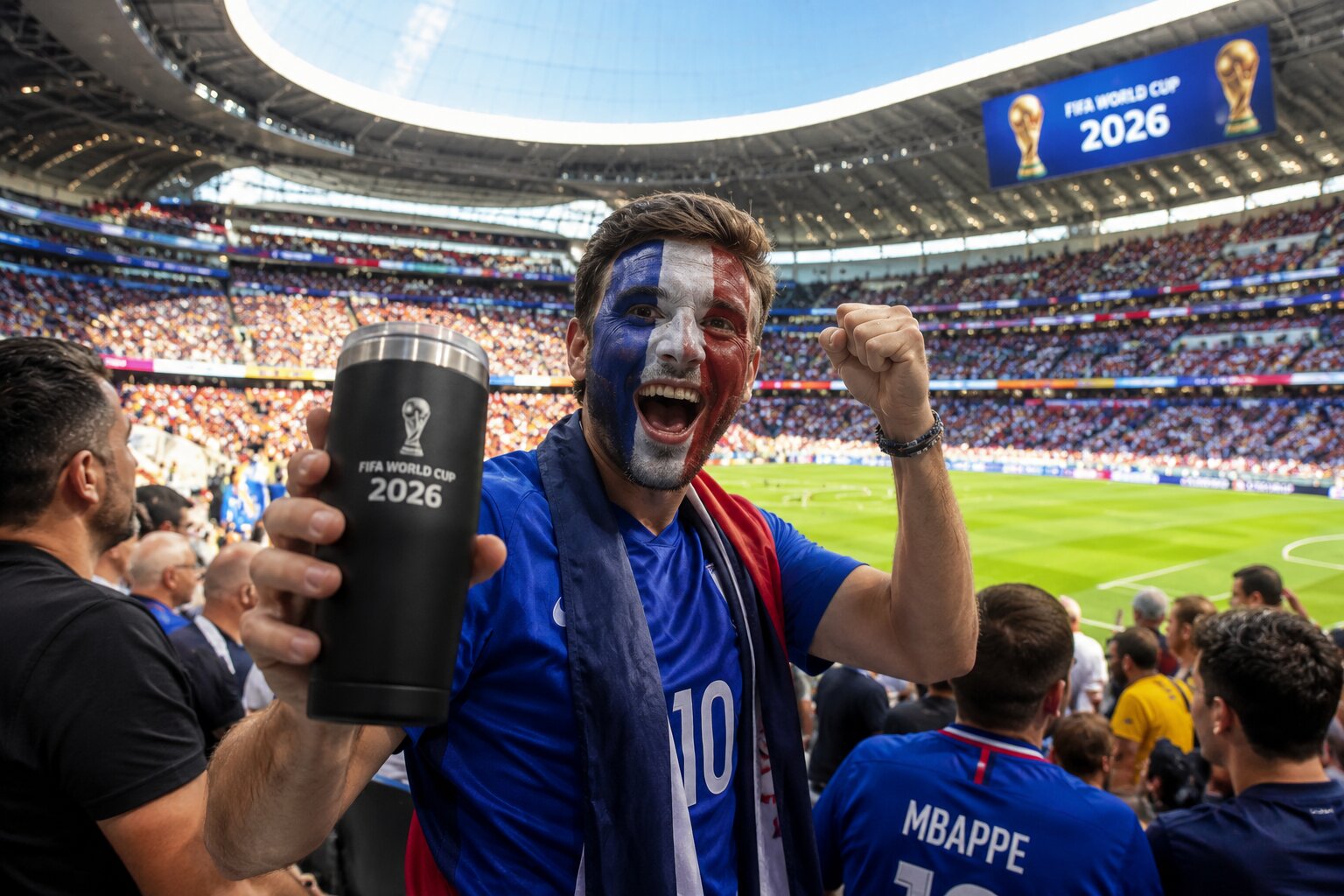
- The Bottle Ban: Single-use plastic water bottles are completely banned inside all 2026 stadiums. Fans must rely on stadium-provided biodegradable cups or purchase official reusable tournament containers.
- Tactical Rule Shifts: The interpretation of the offside rule soccer is becoming stricter with the implementation of advanced semi-automated VAR systems.
- Substitution Strategies: The permanent adoption of the five soccer substitution rules allows managers unprecedented tactical flexibility in the grueling summer heat.
- Understanding the Basics: A renewed focus on the basic rules of soccer, specifically the highly scrutinized rules for a throw in in soccer, aims to eliminate time-wasting tactics.
- Player Spotlights: Legendary figures like Messi, Mbappé, and Vinícius Júnior face immense pressure to adapt to these tactical and operational evolutions.
1. Beyond the Ban: Why Water Bottles Are Out in 2026
The decision to ban plastic water bottles is not merely a bureaucratic whim; it is a meticulously calculated strategy addressing two primary concerns: ecological impact and crowd safety. Historical data from previous tournaments shows that millions of plastic bottles are discarded in stadiums, creating a logistical nightmare for host cities and devastating environmental footprints.
Furthermore, from a security standpoint, sealed water bottles have occasionally been utilized as projectiles during highly charged matches. By transitioning to open, biodegradable cups and carefully monitored hydration stations, organizers are mitigating risks while honoring a commitment to host the “greenest World Cup in history.” Fans planning their matchday survival kits must now prioritize officially licensed, empty reusable containers that can be filled upon entry.
“This operational pivot is monumental. We are observing international football coverage shift entirely. The logistics of hydrating 80,000 screaming fans in the North American summer without single-use plastics will be an engineering marvel in itself.” – Global Stadium Operations Analyst
2. Navigating the Nuances: A Deep Dive into Essential Soccer Rules
While the administrative changes dominate pre-tournament chatter, true aficionados are laser-focused on the evolving interpretations of the basic rules of soccer. The International Football Association Board (IFAB) has mandated stricter enforcements to preserve the flow of the game. For casual fans joining the global phenomenon, a quick refresher on these core principles is essential.
The Stricter Enforcement of Soccer Throw In Rules
Often overlooked, the humble throw-in is receiving immense scrutiny. The precise rules for a throw in in soccer state that at the moment of delivering the ball, the thrower must face the field of play, have part of each foot on the touchline or on the ground outside the touchline, and use both hands to deliver the ball from behind and over the head. In recent league play, referees have been notoriously lenient.
However, directives for 2026 indicate a crackdown. Players violating the precise soccer throwing rules will face immediate foul throw calls, turning possession over to the opposition. In high-stakes knockout games, a misunderstood interpretation of the rules for throw in soccer deep in a team’s defensive third can instantly result in a lethal counter-attack. The precision of the soccer throw in rules is no longer just a technicality; it is a tactical battleground.
Demystifying the Internet Myth: “Soccer Rule 34”
As the sport grows in the digital age, trending football topics often intersect with internet culture. A frequent anomaly in search trends is the mysterious soccer rule 34. To be absolutely clear: IFAB’s official Laws of the Game consist of exactly 17 laws. The term soccer rule 34 is predominantly an internet meme or a colloquial misunderstanding confusing specific tournament bylaws (like a 34th clause in a local league’s operational manual) with the actual rules of play on the pitch. When discussing authentic soccer rules, anything beyond Law 17 (The Corner Kick) is a myth.
The Tactical Weight of the Back Pass Rule Soccer
Introduced in 1992, the back pass rule soccer remains one of the most transformative regulations in modern football history. It dictates that a goalkeeper cannot handle the ball if it has been deliberately kicked to them by a teammate. In the context of 2026, where high-pressing systems dominate league trend analysis globally, the back pass rule soccer forces goalkeepers to possess elite footwork and distribution skills.
Teams like Spain and Germany heavily rely on drawing the opposition’s press and utilizing their goalkeeper as an outfield sweeper. Any hesitation or poor touch under the constraints of this rule will lead to immediate, devastating high-turnover goals. Understanding this dynamic is crucial for any fan analyzing a team’s defensive build-up phase.
3. Player Performance Insights: The Titans of 2026
With the rules clearly defined and the stadium logistics set, the spotlight turns to the individuals who will define the tournament. The pressure is immense, and player performance insights derived from recent international fixtures provide a glimpse into the impending drama.
Lionel Messi (Argentina)
The undeniable maestro. Even as he manages his minutes, Lionel Messi’s situational awareness dictates the rhythm of the Argentine squad. Tactical match analysis indicates that Argentina will utilize Messi in a highly specialized free role, conserving his energy for devastating bursts in the final third. The expanded soccer substitution rules, which now permanently allow five changes, are a massive boon for veteran players like Messi, enabling manager Lionel Scaloni to orchestrate precise tactical rotations to keep his star fresh.
Kylian Mbappé (France)
The heir apparent to the global crown. Mbappé’s pace forces opposing defenses to fundamentally alter their structure. When analyzing the offside rule soccer—especially with semi-automated 3D mapping technologies ruling on millimeter margins—Mbappé’s ability to perfectly time his explosive runs is his greatest asset. French match tactics heavily revolve around drawing teams out and releasing Mbappé into the resulting acres of space, a strategy that is incredibly difficult to counter without inviting immense pressure elsewhere.
Jude Bellingham (England)
A generational talent who has revolutionized the modern midfield. Bellingham’s engine, defensive tenacity, and late runs into the penalty box make him the complete package. England’s success heavily relies on his ability to transition the ball from deep defensive blocks into attacking phases. His understanding of the basic rules of soccer regarding tactical fouls and spatial manipulation allows him to command the pitch with a maturity far beyond his years.
Vinícius Júnior (Brazil)
The embodiment of modern Brazilian flair combined with ruthless European efficiency. Vinícius excels in one-on-one isolation plays. League trend analysis from his club performances shows that he is almost unplayable when isolated against a fullback. Brazil’s international football coverage frequently highlights how their tactical setup is designed to quickly overload one side of the pitch before switching the play to an isolated Vinícius on the opposite flank.
4. Match Tactics: How New Soccer Rules Dictate Strategy
The intersection of the aforementioned rules and modern athletic capabilities creates a fascinating tactical landscape. Let us explore how specific regulations are molding the overarching strategies of elite nations.
The Impact of Semi-Automated Offside Technology
The traditional interpretation of the offside rule soccer was subjective, leading to endless controversy. The new semi-automated systems track limb extremities precisely. This forces high-line defenses (like those employed by Germany and Spain) to be incredibly disciplined. Strikers can no longer rely on the “benefit of the doubt” for leaning offside. Conversely, defenders must ensure perfectly synchronized movements when stepping up to trap an attacker.
Exploiting the Five Substitution Limit
The permanent enshrinement of the five soccer substitution rules has fundamentally changed late-game dynamics. In previous decades, a starting XI was expected to endure 90 minutes. Today, managers view a match in phases. The ability to refresh 50% of your outfield players means that high-intensity pressing can be sustained for the entire match. Teams with deep, quality benches (like France and England) possess a distinct, mathematically proven advantage as the tournament progresses into the grueling latter stages.
“The five substitution rule has killed the concept of the ‘tired final 15 minutes.’ Matches are now won by the impact of the ‘finishers’—the substitutes brought on specifically to exploit micro-fatigue in the opposition’s defensive structure.” – Premium Football News Portal Analyst
5. Comparison Tables: Squad Depth & Tactical Flexibility
To accurately project tournament success, we must evaluate the contenders across critical performance metrics based on the latest league trend analysis and international data.
| Nation | Key Tactical Philosophy | Bench Depth (1-10) | Adaptability to Strict Rule Enforcement | Vulnerability Index |
|---|---|---|---|---|
| France | Transitional Speed / High Press | 10.0 | Very High (Disciplined Defense) | Low |
| England | Controlled Possession / Midfield Overload | 9.5 | High (Excellent Set-Piece execution) | Medium |
| Brazil | Wide Isolation / Individual Brilliance | 8.5 | Medium (Prone to emotional fouls) | Medium |
| Argentina | Aggressive Midfield / Pragmatism | 8.0 | Medium (Historically physical playstyle) | High (If forced to chase games) |
| Spain | Relentless Tiki-Taka / High Line | 9.0 | High (Elite technical discipline) | High (Against elite counter-attacks) |
6. League-Wise Updates & Global Trending Football Topics
The preparation for 2026 is deeply intertwined with current league performances across the globe. International managers are meticulously monitoring their players’ form and fitness.
- Premier League (England): The incredibly high physical toll of the Premier League means players like Phil Foden and Bukayo Saka must be managed carefully. The sheer speed of the English game translates well to international transitions.
- La Liga (Spain): Spanish clubs are prioritizing technical possession, ensuring players like Pedri and Gavi arrive at the tournament with unmatched passing rhythms, though questions remain about their physical durability over a long tournament.
- Serie A (Italy): A resurgence in tactical defending means Italian players (and those playing in Italy) are arriving with elite understandings of spatial awareness and the exact basic rules of soccer regarding defensive positioning.
- Major League Soccer (USA): The continued growth of MLS, highlighted by the arrival of global superstars, means the domestic infrastructure and fan culture in North America are primed and fully educated on the nuances of the global game.
7. The Verdict: Preparing for a Historic Tournament
The 2026 World Cup will be an absolute spectacle, defined as much by what happens off the pitch—such as the historic ban on single-use water bottles—as by the breathtaking talent on it. As fans, understanding the rigorous enforcement of the rules for a throw in in soccer, the unforgiving nature of the updated offside rule soccer, and the tactical chess matches enabled by the new soccer substitution rules will dramatically enhance your viewing experience.
This tournament is not just a celebration of athletic prowess; it is the pinnacle of strategic planning, environmental consciousness, and the relentless evolution of the beautiful game. Prepare your reusable cups, study the soccer rules, and get ready to witness history.
8. Frequently Asked Questions (FAQs)
- Why did FIFA ban water bottles for the 2026 tournament?
- The ban is a dual-purpose initiative aimed at radically reducing the environmental footprint of single-use plastics and enhancing stadium security by eliminating potential projectiles from the stands.
- How exactly has the offside rule soccer changed?
- While the fundamental offside rule soccer remains the same, the enforcement has changed drastically. Semi-automated, 3D limb-tracking technology is now used, meaning players can be ruled offside by mere millimeters in real-time, removing human error from the refereeing equation.
- What happens if a player violates the soccer throwing rules?
- If a player fails to adhere to the strict rules for a throw in in soccer (e.g., lifting a foot, improper hand placement), a “foul throw” is called, and possession is immediately awarded to the opposing team.
- Is “soccer rule 34” a real rule?
- No. The official Laws of the Game governed by IFAB consist of only 17 rules. Any reference to soccer rule 34 is an internet myth or a misunderstanding. The basic rules of soccer end at Law 17.
- How do the modern soccer substitution rules affect gameplay?
- The permanent allowance of five substitutions across three windows allows managers to replace half their outfield team. This soccer substitution rules update permits sustained, high-intensity pressing tactics for the full 90 minutes.
- Can a goalkeeper pick up the ball from a teammate under the back pass rule soccer?
- No. Under the back pass rule soccer, if a player deliberately kicks the ball to their own goalkeeper, the goalkeeper cannot handle it with their hands. Doing so results in an indirect free kick for the opposition inside the penalty area.